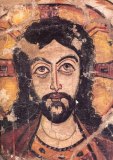
The idea of the Learning Organisation is one that interests me[i]. What particularly attracts me to it is that it doesn't just seem like some new idea or shallow management trick but rather that it expresses some fundamental wisdom about the human condition. As I was reading about it I constantly found myself thinking about Jesus and how he worked with his group of disciples developing the four core disciplines:
Below I describe my development of these themes. It is not meant to be a Christian justification for the Learning Organisation idea but rather an exploration of fundamental wisdom about how human beings can work together.
Personal Mastery
" Personal mastery is the process of continually clarifying and deepening an individual's personal vision. This is a matter of personal choice for the individual and involves continually assessing the gap between their current and desired skills in an objective manner, and practising and refining skills until they are really grasped. This develops self esteem and creates the confidence to tackle new challenges."
"Learning to expand our personal capacity to create the results we most desire, and creating an organisational environment which encourages all its members to develop themselves toward the goals and purposes they choose"
"Personal mastery goes beyond competence and skills, though it is grounded in competence and skills. It goes beyond spiritual unfolding or opening, although it requires spiritual growth. It means approaching one's life as a creative work, living life from a creative as opposed to reactive viewpoint"
Senge p 141
Personal mastery does not mean having complete control over your life but rather, from a Christian point of view, being so in touch with God that every new experience is an opportunity for growth and worship.
Jesus clearly encouraged his disciples to develop this kind of personal mastery. He encouraged them not to worry about their personal finances or the opposition they would experience but rather develop a fundamental trust in God. He developed their competence as preachers by sending them out in pairs to teach and heal. The whole experience of being a disciple was a three-year training programme in personal mastery. Interesting and significant as this is to reflect upon, however, I believe that the truly important thing we can observe in the Gospels is the development of Jesus’ own personal mastery.
Popular understandings of Jesus often only really see him as half human. So concentrated are they on Jesus’ divinity they fail to see that Jesus was fully human and therefore had to learn to develop his personal mastery. The perfection of Jesus is seen in the whole compass of his life and how he learned from his experience and it is for this reason that he is a model on which we can build our lives -- for he truly understands what it is to be human.
Jesus's journey to personal mastery
The adolescent Jesus in the temple
Jesus's journey to personal mastery started early! Even as an adolescent he displayed an appetite for learning and a willingness to learn from the best sources available. Learning is a lifelong venture best started right now.
Prayer and the wilderness
Jesus's 40 day retreat in the wilderness was a critical turning point in his life. He marked his transition from ordinary workman to travelling rabbi. It was an opportunity for him to focus on his own inner life and face the demons within, from it came the inner strength which carried him right through to the cross. Together with his baptism it gave him the absolute conviction that God was with him but left him open to ongoing learning.
Travelling through Galilee
We can see in Jesus's teaching ministry in
Confession, transfiguration and setting his face
In the centre of the Gospels we find the
episodes which proved the catalyst in moving Jesus on to the new phase in his
life. Firstly he discusses with his
disciples how he is regarded by the people, next he reveals to them his growing
realisation that he must go to
Confronting the authorities
Jesus had learned from his experiences in
Gethsemane -- facing his fears
Despite his strength of conviction Jesus
still feels the need to engage in prayer and face his own fears in the
Crucifixion and resurrection
Because of this journey Jesus achieved the personal mastery necessary to go through the greatest challenge of his life -- his arrest, interrogation, torture and murder. At this crucial time he did not flinch from doing what was necessary. We can see from his words on the cross that he experienced the pain but this did not stop him from facing down the authorities, reaching out to those who open their hearts to him and bringing comfort to his mother and friends. And beyond the crucifixion is resurrection, the personal mastery which gives us the strength to go through the crucifixion also empowers us to experience the resurrection. We can know that no matter how tough life is there is in Jesus, the perfect master, the hope of the final resurrection: new life in all its fullness.
Mental models.
“Each individual has an internal image of the world, with deeply ingrained assumptions. Individuals will act according to the true mental model that they subconsciously hold, not according to the theories which they claim to believe. If team members can constructively challenge each others' ideas and assumptions, they can begin to perceive their mental models, and to change these to create a shared mental model for the team. This is important as the individual's mental model will control what they think can or cannot be done”
"The problems of mental models lies not on whether they are right or wrong -- by definition, all models are simplifications the problem with mental models arise when the models are tacit -- when they exist below the level of awareness" Senge p 176.
"Just as "linear thinking" dominates most mental models used for critical decisions today, the learning organisations of the future will make key decisions based on shared understandings of interrelationships and patterns of change" Senge p 204
Mental models are therefore about our habitual ways of thinking -- the way we think without even realising it. Therefore, in order to grow spiritually we need to become aware of these mental models -- as Paul had it "be transformed by the renewing of your minds", no longer be in slavery to sub Christian thought patterns but become fully aware of your fundamental attitudes to life". True Christian discipleship is dependent on this kind of growing awareness, it could perhaps be seen as the first step in repentance -- if we don't know what's wrong with the way we think how can we change it? In Jesus's teaching we can see a fundamental attempt to engage with people's mental models and so enable them to experience the liberation of faith and discipleship.
The Sermon on the Mount
The Sermon on the Mount can be seen as an attempt by Jesus to reshape the mental models of his followers.
The Beatitudes
To begin with we have the Beatitudes -- a striking series of aphorisms which starts to get listeners to rethink the way they look at the world. The first three Beatitudes are particularly striking -- the poor, the grieving and the insignificant are seen not as victims but as the blessed of God. A particularly interesting Beatitudes is the 6th -- "Blessed are the pure in heart for they will see God", especially when we realise that in Jesus's time it was the heart that was thought to be the seat of thought not the mind. If our habitual models of thinking are pure and holy then we will be in a position to know God fully!
"You have heard it said..."
Jesus then moves on to a series of sayings with the same basic pattern "You have heard it said but I say to you...". These sayings describe the habitual rules and regulations of the culture, Jesus doesn't tell people to stop thinking in that way but he pushes them further -- love your neighbour, great, but also love your enemies. Don't commit adultery, OK, but are you any better if you look with lustful intent? Occasionally he turns things right round -- you live by "an eye for an eye" but I tell you do not resist evil. This can be perplexing for there is no doubt that Jesus resisted the evil of Pharisees and hypocrites, as we will see later, but if we see it as a challenge to examine our mental and models rather than a harsh and simplistic rule then it begins to make sense. The same goes for the conclusion to this section -- be perfect as your father in heaven is perfect. Don't ever be content, keep challenging your mental models, keep examining your habitual ways of thinking and seek to become fully aware.
Hypocrisy and money
Jesus same goes on to address two problems which can trap us in our mental models -- hypocrisy and worry about money. Hypocrisy is literally playacting, playing a role rather than our authentic selves, this is the ultimate in lack of awareness and will prevent us examining our mental models. So also, will undue worry about money and the necessities of life, our habitual ways of thinking are often designed to keep us safe and avoid risk. But this kind of life which is ultimately rooted in fear will keep us from experiencing the freedom of following Jesus because it keeps us locked into models of thinking which are designed to keep things as they are rather than experience the new. If we are scared and worried there is no way that we will challenge our mental models.
The House on the Rock
The Sermon on the Mount ends with the parable of the wise and foolish builders. To build on the sand is to build on our unexamined mental models, but to build on the rock is to build on habits of thinking which have been challenged and changed by Jesus.
Shared Vision
" To create a shared vision, large numbers of people within the organisation must draft it, empowering them to create a single image of the future. All members of the organisation must understand, share and contribute to the vision for it to become reality. With a shared vision, people will do things because they want to, not because they have to."
"A shared vision is not an idea. It is not even an important idea such as freedom. It is, rather, a force in people's heart, a force of impressive power. He may be inspired by an idea, but once it goes further -- if it is compelling enough to acquire the support of more than one person -- then it is no longer an abstraction. It is palpable. People begin to see it as if it exists. Few, if any, forces in human affairs are as powerful as shared vision"
Senge p 206
Understanding the Gospels
The idea of shared vision might at first
sight cause problems for us when trying to associate Jesus was the idea of
Learning Organisations, but only if we misunderstand what the Gospels are. Some people view the Gospels in an almost
Islamic way -- as if they descended from heaven for us to worship and obey, but
this is not the case. Each gospel is the
creation of a particular community of Christians giving their particular slant
to the tradition of Jesus as it had been passed down to them. The process of it being accepted into the
wider canon of Scripture was the process by which the whole Church decided to
own the particular vision and make it part of the general Christian
vision. Now as we read it we seek to
make it part of ourselves, not treating it as an objective ancient text but as
the Living Word of God which we take into ourselves and make part of us. The gospel of John in particular is a
wonderful expression of the shared vision -- a vision which is particularly
well expressed in Jesus's discourse to the disciples before the passion
narratives (John 13-17). Just as
organisations need a shared vision so also is the necessary for Christians to
understand that their religion is not a matter of following laws created by
other people but entering into communion with God and our fellow believers so
as to share the one vision of the
Jesus's last words
A painful context
Chapter 13 sets the agenda for what is to follow in Jesus's lengthy discourse. It is a potentially disheartening context -- one of betrayal, misunderstanding and failure and yet here Jesus introduces his key theme of love. A love which is not merely about words but is practically expressed in his washing of the disciples feet. Judas may be planning to betray him and Peter failing to understand much of what is going on but still Jesus holds fast to the vision which is to transform the lives of the disciples and the whole world. And as we enter into chapter 14 Jesus encourages us to share this vision "Do not let your hearts be troubled. Trust in God, trust also in me. In my Father's house are many rooms... You know the way to the place where I am going". The vision is one that we can truly own.
Struggling to share the vision
In chapter 14 the disciples struggle, like Peter before them, to understand what Jesus is saying and, therefore, how they can participate in the vision. Jesus emphasises to them that it is not merely a matter of intellectual understanding but of participation in God himself. This is to be achieved by the presence of the Holy Spirit. Chapter 15 lacks contributions from the disciples and seems more like a meditation by Jesus on the mysteries which he is seeking to communicate to the disciples -- the key image is of the vine and the branches which emphasises the integration of the disciples into Jesus around the central command of "Love each other as I have loved you".
Sharing the vision
In chapter 16 the disciples begin to understand and own the vision for themselves "Now you're speaking clearly... we can see that you know all things and you do not even need to have anyone ask you questions. This makes us believe that you came from God ". "You believe at last" Jesus answered" They have begun to participate in the vision and it will keep them strong through the trials which are about to face them during the nightmare of Jesus's arrest and crucifixion. Jesus can now relax for his disciples have caught sufficient of the vision to carry them through this next stage and in three prayers for himself, for his disciples and for all believers he succinctly sets out his vision and his prayer for it to become as much part of his followers as it is of him "I have made you known to them, and will continue to make you known in order that the love you have for me may be in them and that I myself may be in them".
Continuing to share the vision
What is fascinating is that in reading and meditating upon these words they become true. This is a shared vision of astonishing magnitude which has stretched on throughout the millennia -- the vision of love and participation in God which still has power to motivate individuals and bring them together in communities for the benefit of the whole world. Truly the Gospel is the ultimate shared vision!
Team learning
"Virtually all important decisions occur in groups. Teams, not individuals, are the fundamental learning units. Unless a team can learn, the organisation cannot learn. Team learning focuses on the learning ability of the group. Adults learn best from each other, by reflecting on how they are addressing problems, questioning assumptions, and receiving feedback from their team and from their results. With team learning, the learning ability of the group becomes greater than the learning ability of any individual in the group"
"Team learning is the process of aligning and developing the capacity of the team to create the results its members truly desire. It builds on the discipline of developing shared vision. It also builds on personal mastery, for talented teams are made up of talented individuals. But shared vision and talent are not enough."
Senge p 236
We have looked at the way Jesus developed his personal mastery, how in the gospel of Matthew he challenges the mental models of those who would be his followers and the shared vision that is created in John 13-16. I now want to look at the gospel of Luke and its sequel the Acts of the Apostles to see how Jesus created a situation of team learning which enables his work and message to be more than a nice idea but something which changed the world.
Learning together as disciples of Jesus
Jesus sets up a number of situations where the disciples can learn together:
1. Learning in action. The miraculous catch of fish and the calling of the disciples
2. Learning in reflection. The question at Caesarea Phillipi
3. Learning through ritual. The last supper
4. Learning in a crisis. Pentecost
Learning in action
Luke dramatizes the calling of the first disciples by setting it within the context of the miraculous catch of fish. This is a significant change from Mark who tells the story much more simply. It signals Luke's particular concern for the band of followers which Jesus creates - not simply as examples of what it means to be an individual disciple but as a group who learn to follow Jesus together.
The miraculous catch of fish (Luke 5) is
only the first of a series of dramatic experiences which the disciples go
through together - the calming of the storm, the feeding of the 5000, the
healing of the Gerasene demoniac etc. etc. These all give the disciples the
opportunity to learn through experience rather than just listening and
talking. In events such as the feeding
of the 5000 (Luke
Learning in reflection
Immediately after the Feeding of the 5000 Jesus encourages the disciples to reflect on what they had experienced during his ministry as he asks them "Who do the crowds say that I am?". The ensuing dialogue leads Peter into the central insight that Jesus is the Messiah. Again we see Jesus working to involve all the disciples in what he is doing - this time through a process of reflection. It is not enough for them to be involved in amazing events they also need to work out what they mean. This will not happen if Jesus simply interprets them for the disciples, they need to think about them for themselves - and not as individuals but as a gathered group. Whilst it is true to say that the gospels concentrate on recording Jesus's words there is in their accounts the constant presence of the disciples questioning and engaging with what Jesus says and does. This, together, with Jesus's willingness to respond to questions creates an atmosphere where enquiry is encouraged so that Jesus creates around himself a space where learning is possible, and indeed, expected.
Learning through ritual
The last supper is a powerful learning experience for the disciple group. It has something of the characteristics of the previous examples - the dramatic parable of the washing of the feet (recorded in John), the discussion and dialogue around the table interspersed with Jesus's teaching, but it also has a ritual dimension. It occurs within the general context of the Passover meal giving it a deep historical resonance and natural familiarity, but is also the setting for the creation of a new ritual which is to be at the heart of the new Christian community after Jesus's Ascension. This creation of rituals is an area where religious organizations maybe have an advantage as learning organizations. Of course, as we all know, rituals can become formalised and meaningless and the word tends to have those connotations for us nowadays especially if we have an evangelical background. But it seems to me worth resurrecting a more positive understanding of the word. Rituals are simply actions which are repeated and which gain added significance for us through their repetition, or as the writer of a recent book on transforming rituals, Roy Oswald puts it
Rituals are the most basic of human activities, preceding the development of speech. In fact, many researchers have noted that even animals engage in activities similar to human ritual. Rituals help us to express more than the rational parts of ourselves and are enriched when more of our senses are involved. They allow us to go beyond words.
Team meetings operate through rituals - the standardised agenda with minutes and matters arising gives it a comfortable familiarity which also expresses a rarely vocalized truth that we value accuracy and consensus. When we have a meeting without minutes it immediately gives us the message that it is, for better or worse, a different sort of meeting The creation of the values tree in CANDL is an example of a ritual gaining more power through a visual expression beyond words.
Jesus recognised that his followers couldn't rely on dramatic experiences for their learning but needed more than just talk and reflection so the ritual of the last supper became a shared experience through which the crucial events of his life and death could be relived. But there was still to be a final dramatic experience for the disciples which Luke records - the crisis caused by his departure.
Learning through crisis
The experience for the disciples of Jesus leaving was traumatic. The person who had been the centre of their lives was no longer present but they did one crucial thing which enabled them to survive the crisis and learn through it. They kept together. They didn't disperse to their previous lives but came together to wait for what God would do next. This opened up the possibility for the Spirit to descend and empower them in a completely new way. It was an experience for which they needed to be together - it was team learning. An individual baptism of the Spirit just wouldn't have created the same energy or shared vision to carry them through the trials which lay ahead as they took on the challenge of being apostles.
The word apostle is important to Luke. He uses it more than the other gospel writers because he is particularly aware that the disciples were not just followers of Jesus. They were a team sent by Jesus to do his work (the word apostle means "one sent"), so after Pentecost they are no longer referred to as disciples but exclusively as apostles. The individual Jesus is central to Christian faith but equally central is in reality of Jesus being physically present on earth through his body - the believers learning together.
James Ashdown 5 Nov 2003 revised April 2010
[i] It has been particularly developed by Peter Senge in works such as The Fifth Discipline -- the art and practice of the learning organization. Random House 1990