Ehud had made a double-edged sword
about a foot and a half long, which he strapped to his right thigh under his
clothing. 17 He presented the tribute to Eglon king of
The king said, "Quiet!" And all his attendants left him.
20 Ehud then approached him while he was sitting alone in the upper room of his summer palace and said, "I have a message from God for you." As the king rose from his seat, 21 Ehud reached with his left hand, drew the sword from his right thigh and plunged it into the king's belly. 22 Even the handle sank in after the blade, which came out his back. Ehud did not pull the sword out, and the fat closed in over it. 23 Then Ehud went out to the porch ; he shut the doors of the upper room behind him and locked them.
24 After he had gone, the servants came and found the doors of the upper room locked. They said, "He must be relieving himself in the inner room of the house." 25 They waited to the point of embarrassment, but when he did not open the doors of the room, they took a key and unlocked them. There they saw their Lord fallen to the floor, dead.
Judges 3: 16-25 (NIV)
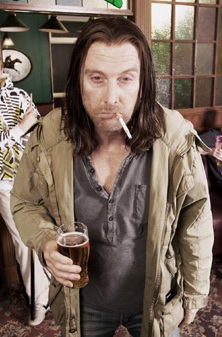
I missed the first showing of Channel 4's programme set on a
Ehud came to prominence during a time when the Moabites
under king Eglon were oppressing
There is something very appealing about the trickster to the
modern imagination. We are impressed by
people that can resist authority, particularly when people can do that with
style and humour. Here surely lies the
appeal of Shameless. Shameless is often
described as being gritty and it certainly does touch on issues associated with
the rough side of life such as drugs and violence but it is essentially a comic
vision of life. Nothing really bad ever
happens, no one actually dies although much fun is had with death and the
conventions surrounding it, sex is abundantly present but sexual jealousy never
leads to unreconcilable feuds, nor, is AIDS ever mentioned. The plot of Shameless is always essentially
the same -- someone gets themselves into a fix and family and friends rally
round to get them out of it, it is very far from being the Waltons but neither
is it Elmina's Kitchen[1]. Shameless is about surviving on the fringes
of society. It is a comic vision of how
the excluded poke two fingers up to the ‘concerned’ establishment and get on
with enjoying life -- alternately resisting and co-opting their representatives
into their marginal lifestyle. But it is
not what life is really like and in the end offers us no hope, for it is
entirely apolitical. It offers no vision
of how communities might be organised or of how institutions can be created and
sustained. The same thing can be said of
the Judges such as Ehud: they are brilliant explosions of the divine spark but
they are unable to form
The problem with the Judges is one of continuity. Whilst a strong Judge is in charge the Israelites
can enjoy peace but once the strongman (and occasionally strong woman) dies the
nation becomes vulnerable and quickly descends into chaos or oppression. The trickster relies heavily on his
personality and face-to-face relationships -- this is ideal for a chaotic
environment such as
Shameless is great fun but it is also a valuable resource for Christians working on estates. One of the projects on my wish list is to write a training programme based on the first series! But seen through the lens of the Judges we can celebrate its vision of life and also see its inadequacies. In the end life is more than a party, more than getting ourselves out of scrapes in stylish and humorous ways, more than a small circle of family and friends -- it is about building sustainable communities which persist and grow from generation to generation. Not always so much fun but in the end much, much more satisfying.